

Since the middle part of 2022, the discussion around the significant drop in buyer demand has been focused primarily on the affordability issue — from the continued high cost of housing and the high mortgage rates. Home sellers have certainly felt the effect of the diminished buyer pool with longer marketing time, fewer showings, and softer prices with more concessions, but it’s important to understand that buyers have good reasons to be sitting on the sidelines. While home prices and mortgage rates are, indeed, very relevant factors, it’s not the whole story, and it’s worth exploring further.
Buyers are being squeezed from many different financial angles, from dizzyingly high car payments, high interest credit cards, and record high student loan debt. All of this is, of course, in addition to much higher costs from groceries to gas, and much more. When qualifying for a mortgage, it is not just about the payment relative to a buyer’s income, but rather the total household debt-to-income ratio (DTI). Today, we’re going to talk about these key areas of debt, how they affect a buyer’s ability or willingness to purchase, and what buyers can do to improve their situation. Debt is an incredibly personal burden, so this topic is relevant to anyone, whether trying to purchase a home, selling a home to pay off debt, or just feeling the struggle.
During the pandemic, there was an extreme shortage of cars for sale, due in large part to supply chain constraints. Meanwhile, interest rates were at all-time lows, which greatly increased demand. This combination inflated the already expensive cost of a new vehicle to historic highs of around $40,000. Now, as of 2026, the average price is about $50,000 with an average APR of 6.5%, amortized over nearly six years.
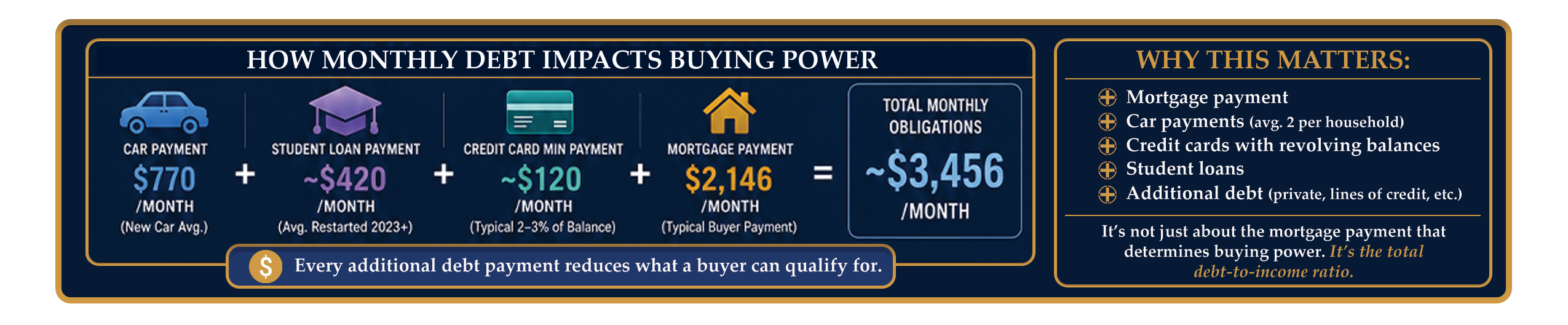
Car payments in America are one of the highest monthly debt payments, second only to the mortgage. The average new car payment is up 36% since 2021, at over $770 per month, and used cars are slightly less at $531. About 20% of new cars carry a payment of an astonishing $1,000 or more! Not to put too fine a point on this, but it should be noted that this is per vehicle, and the average household has at least two. One can easily see how quickly this math adds up and eats into a person’s monthly cash flow, and therefore their ability to qualify for a mortgage. For context, $770 per month equates to roughly $135,000 more borrowing power on a mortgage.
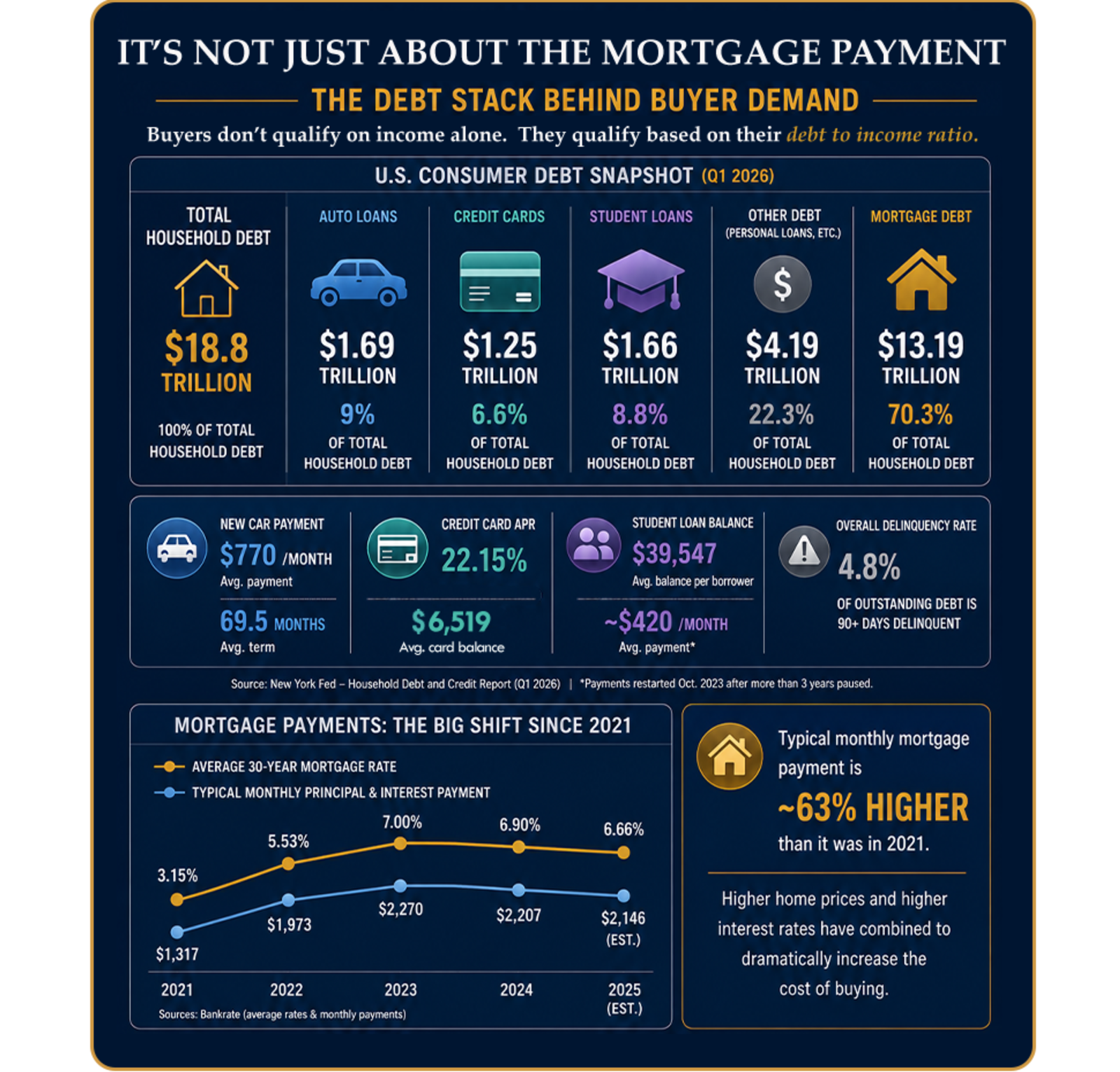
Unlike the glaringly obvious anchor of hefty car payments, credit cards are more of a sneaky kind of debt that can slowly accumulate during tough times. While it can be said that the average household credit card balance is significantly higher today, the bigger issue is actually the borrowing costs, which are 60% higher than in 2021. Consequently, balances are harder to pay off, they accrue more quickly, and payments are much larger. When assessing a borrower's ability to qualify, these larger payments are also factored into the debt-to-income ratio, and these revolving balances are also weighted more heavily on credit scores.
The conversation about student loans is a bit different and more nuanced, but equally as relevant to current buyer behavior. In March of 2020, as a supportive economic measure during the pandemic, all student loan payments were frozen. This effectively freed up hundreds of dollars of monthly cash flow, and this, along with other economic stimulus payments, helped create an aggressive down payment savings engine for would-be home buyers. A borrower would still have to qualify including their normal loan payment as part of their DTI, but psychologically they didn’t feel the financial burden of it. This payment freeze lasted until the end of 2023, and by that time mortgage rates were nearing 8%. Prospective buyers now felt the payment burden, and also had hundreds of dollars less per month to put into saving for a down payment. Student loans are amortized over longer periods of time than credit cards and car loans, but they still amount to an average of $420 per month. Each one of these debts accumulate and compound, making it evermore difficult for a buyer to qualify for a mortgage, especially when factoring in that the mortgage payment, itself, is 63% higher than it was in 2021.
At the beginning of this article, I said that we would talk about how a buyer could improve their financial situation, and that’s a promise I will keep. Debt can be utterly suffocating. There is hope, however, and someone buried in debt can absolutely still find their way to home ownership. It all starts with creating a plan and, more importantly, sticking to it. Paying off debt is one of the single largest forms of self liberation a person can do. By paying your debts off smallest to largest, you can plow through tens of thousands of dollars in debt and free up your cash flow, reduce your debt to income ratio, and save for a house. Interest rates will ebb and flow like the tides, but debt is largely within our control. If you or someone you know is either struggling with debt or is working to save for a home and facing the DTI challenge, please give me a call. As always, we can talk about your life and your situation. I’d love to talk nerdy with you :)