

There is a profound line from John Lennon that says, “Life is what happens to you while you’re busy making other plans”. If you’re willing to follow me and read on, I think it’s worth talking about this idea in the context of the real estate market. We end each year and begin anew with a forecast of what might lie ahead, without any concept of what events could unfold and derail our expectations. The year 2020 is a great example of this. Within only a few short months, COVID began and turned the world on its head. People were filled with fear, and while some predicted the next great crash, it turned into the hottest real estate market we’d ever seen. When January of this year began, we had no idea our nation would be at war the following month. And so, because this is currently on the minds of many, let’s talk today about what kind of impact this could potentially have on the market.
First, we should say that the war with Iran just started on February 28th, so there has not been a tremendous amount of time to see what the broader implications will be. However, with nearly six weeks as of this writing since the first airstrikes, mortgage rates have rebounded from a low of 5.99% on February 23rd, and are now again hovering in the mid-6% range. With that being said, overall demand has remained fairly resilient and has even climbed a few points on the index. Supply has also continued to climb, but overall, we have yet to see any dramatic shift on either side of the equation. Listings under contract are up slightly over the previous two years, and the luxury sector is setting unbelievable records, with sales volume over 300% higher than in 2021.
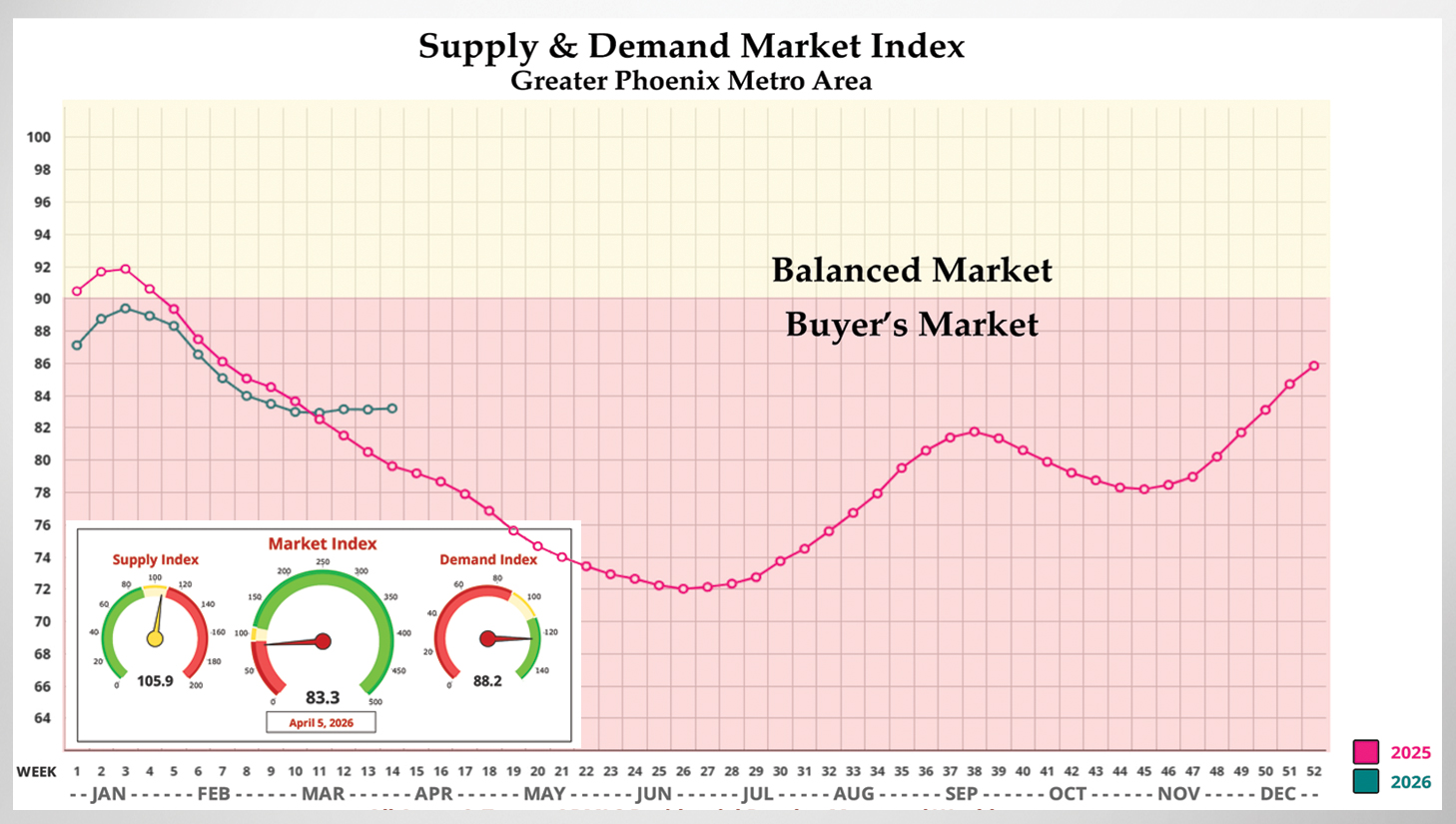
You might be saying to yourself as you read this that it seems that the war hasn’t had much of an effect on the housing market, and as of today, the metrics would agree with you. It’s important to look at this from a few angles, though, and think about what other factors could change the current situation. To start with, the higher mortgage rates disproportionately affect the lower-to mid-price ranges. So, buyers who are on more of a budget, who were becoming cautiously optimistic as rates dipped below 6%, might now be feeling uncertain about whether they can or should purchase. The closing of the Strait of Hormuz has greatly disrupted the flow of crude oil, natural gas, and materials such as raw metals, polymers & methanol, just to name a few. In turn, this puts strong upward pressure on prices, with some analysts projecting inflation to reach 4.2% by the end of the year. While the Federal Reserve has not yet raised rates, it might at some point, which could again push mortgage rates higher.
I know that all of this might sound like a pretty sobering report, but it is not meant to have a pessimistic tone. There are no conclusions to be drawn, and certainly no dramatic forecasts to be made. I would, however, be remiss in what I feel is my duty to comment on what the effects of a protracted war could be on the housing market that is in the early stages of recovery. If the conflicts in the Middle East come to a quick, tidy, and peaceful agreement, the disruptions to the market could be minimal. If, on the other hand, this carries on for some time, the recovery we’ve been patiently waiting for might be a bit further than we had hoped for. Markets, just like people, do not handle uncertainty very well.
There is a lot of information that we try to pack into a few thousand characters in these newsletters, and that doesn’t leave much room for important nuance, detail, and context. If you’d like to learn more, please consider watching our video commentary above. As always, if you’re considering buying or selling in the coming months and would like to discuss your specific situation, please give me a call. I’d love to talk nerdy with you :)